Showing posts with label Quotation Marks. Show all posts

Friday, December 31, 2021

Thanks for Listening 2021


As this year closes, let me take a moment to express my gratitude and appreciation to all of you that have made this such a great year.

For those patrons that purchased work, you may never truly understand what your support actually means, I work to pay for the necessities so I can continue creating art. Your patronage represents more than a monetary or financial reward, it is encouragement and artistic freedom.

Again, my sincerest gratitude and a Happy New Year!

Jim

-

For my loving wife Linda, no words can express my appreciation for you. You are the best thing that ever happened to me. I am so grateful to have you in my life. Thank you for making me feel like the luckiest man in the world every single day. I love you with all my heart.  Happy Anniversary

-

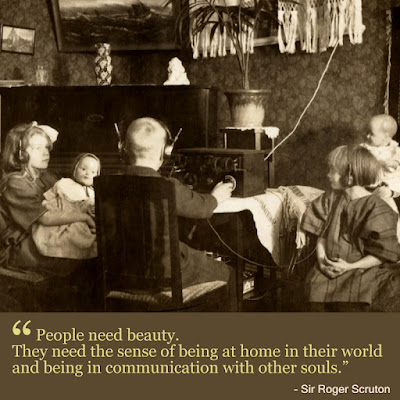
"People need beauty.     They need the sense of being at home in their world and being in communication with other souls."      - Sir Roger Scruton


Explore - Question - Learn - Enjoy, Jim 


 Website - jimserrett.com 
 Studio Blog - jimserrettstudio.com 
 Landscape Blog - Pochade Box Paintings


Saturday, July 4, 2020

Happy Independence Day


The Declaration of Independence, July 4, 1776 
Artist John Trumbull, American, 1756–1843
Oil on canvas, 12 ft x 18 ft, 1818


This painting depicts the moment on June 28, 1776, when the first draft of the Declaration of Independence was presented to the Second Continental Congress. The document stated the principles for which the Revolutionary War was being fought and which remain fundamental to the nation. Less than a week later, on July 4, 1776, the Declaration was officially adopted, it was later signed on August 2, 1776


"We hold these truths to be self-evident, that all men are created equal, that they are endowed by their creator with certain unalienable rights, that among these are life, liberty and the pursuit of happiness. That to secure these rights, Governments are instituted among men, deriving their just powers from the consent of the governed." 
                                                         -Thomas Jefferson, Declaration of Independence


Happy 4th of July


Explore - Question - Learn - Enjoy, Jim 


 Landscape Blog - Pochade Box Paintings


Saturday, May 9, 2020

Art in the Age of Quarantine - Spring of COVID 19


Hello friends, as I write my Spring newsletter, I cannot help but think to myself is this essential? It just seems like there are much more pressing events happening in the world today. That talking about art; well, may not be that important in this Spring of Covid 19. This crisis is unprecedented, I cannot think of anything that compares to it in my lifetime.

How dramatic the changes to daily life are for most people, just think of the battery of new (detaching) phrases that have been added to our vocabulary, social-distancing, quarantine, flatten the curve, essential and non-essential workers. The media is flooded with advice, news and commentary. My wife and son both are working, one as an essential worker and the other remotely, it has certainly tested their limits and their strengths. How can I not help but feel some uncertainty, anxiety and concern? I try to not let it dominate my mind. No wonder finding personal balance during the shutdown is a challenge for each of us.


Honestly, as far as work, I have not been directly impacted much by the pandemic. But I completely recognize how unfair this coronavirus has been to so many. Those daily death tolls are stark reminder that there is a real difference between tragedy and inconvenience.

For me, Art has always been that place to escape to. I have been self-employed most of my life as an artist and spent thousands of solitary hours in the studio. Even back when I was doing advertising art, we had a saying, “no news was good news” meaning when a project was delivered if you did not get a call on it from the client you just assumed that they were happy and you moved on to your next project.  I would go days buried in my work without speaking much. As it turns out I’ve all been self-quarantining for years!

And these days as a fine artist working on the art I want to create, I probably am even more isolated, but that is quite ok with me. We all need interaction with others, but the truth is that art is not a group activity.  Nor a spectator sport or is it created by committee as some current trends want to imply.  Meaningful art is created through the internal reactions of an artist to the world.

The catch is that what gives art meaning…is its capacity to connect with other people.  

I see painting as a very contemplative experience, but it is also the investigation of the world around me. The thoughts, feelings, and experiences of this time of isolation.

So that big word “Art” cannot exist in a vacuum.  Art illustrates the human experience—the wonder of it, the bewilderment of it, the whimsy of it, and yes even the tragedy of it. We would not be who WE are (or connected so deeply) without the essential existence of art.


It's nice to be able to share some positive news with you. My painting Japanese Teapot was accepted into the National Oil and Acrylic Painters Society (NOAPS) 2020 Best of America Small Painting National Juried Exhibition.

-Best of America Small Works exhibition hosted by the McBride Gallery, 215 Main Street in Annapolis, MD 21401. For those that like to know the numbers, 150 paintings were selected from 1096 entries.”

The show has been extended until June 7, 2020


At last count, 15 paintings have sold from the 2020 Best of America Small Works Exhibition. With so many galleries, exhibitions and events being forced to close or cancel due to COVID-19. I want to thank Cynthia at the McBride Gallery who has been working diligently at promoting the exhibition online and extending the physical exhibition, so thankful for her efforts. 

To view the paintings in this exhibition please visit the gallery's website,
or for more information on NOAPS, and a video tour of the show check out.
Show extended through June 7, 2020 at the McBride Gallery, Annapolis, MD

As always, I have several new paintings going in the studio. For frequent updates and works in progress please check out my Instagram or Website. 

Stay safe, stay well, remain vigilant and be kind to each other. 
Jim Serrett


Explore - Question - Learn - Enjoy, Jim 


 Website - jimserrett.com 
 Landscape Blog - Pochade Box Paintings


Monday, December 31, 2018

Thanks for Listening 2018


As this year closes, I would like to take a moment to express my gratitude and appreciation to all of you who have made this such a great year. I appreciate your, kindness, support, and generosity.
Hope you have a great 2019. 

Thank you!


The Sun will not rise or set without my notice and thanks. (Winslow Homer)


For my loving wife, no words can express my appreciation for you.
The source of my greatest happiness. I am extremely lucky, and extremely thankful… for you.
All my love, Happy Anniversary


Explore - Question - Learn - Enjoy, Jim 


Website - jimserrett.com 
Studio Blog - jimserrettstudio.com 
Landscape Blog - Pochade Box Paintings


Creative Commons is a nonprofit corporation dedicated to making it easier for people to share and build upon the work of others, consistent with the rules of copyright.


Creative Commons License
This work is licensed under a Creative Commons Attribution-NonCommercial-NoDerivs 3.0 United States License.


Sunday, September 30, 2018

Eat More Art


Its hard to imagine that summer is over. 
Seems like we were just getting started? 
Where did she go?

And like everybody else there is always a list of honey do’s and DIY project around the house that just don’t make the completion list. I will say it’s not from the lack of effort but more that agendas quickly change, kind of... life happens.

For this artist/painter there is always some unfinished business. Always a few unfinished canvases, neglected sketches, and unrealized ideas. However, I have come to learn this is part of the process, creating art is not a linear thing. It must remain fluid, you cannot let it become a regimented system if you do let that happen then you’re missing so many possibilities. You will never know where things may lead. There are different paths that need to be explored.


Let me be clear, I am not talking about abandoning your artistic voice or changing hats so to speak, because I really believe in the 10,000 Hour Rule Theory.  The principle holds that 10,000 hours of "deliberate practice" are needed to become world-class in any field.  You’re just not going to be a good at any one thing without practicing and focusing on it. It’s not like I am going to stop creating representational art and take up Jackson Pollack drip paintings.

But I am talking about the willingness to explore your art, make messes, create failures and play with the process to learn what you are capable of and what the medium is capable of. The only way to improve your art is to create more art. I have a saying for that, “Eat More Art”.
What does that adage mean? Eat More Art.

Simply devour more art, bring more art into your life, see more art, engage with more art. As an artist and a patron, go to art openings, museums, visit artists’ studios, support living artists. Follow your passion, be inspired. Create more art.

Never stop

Eat More Art.


Explore - Question - Learn - Enjoy, Jim 


Website - jimserrett.com 
Studio Blog - jimserrettstudio.com 
Landscape Blog - Pochade Box Paintings   


Wednesday, November 29, 2017

Paint what you see not what you think you see.


On my drawing table I have a small note, an axiom which states,
 “Paint what you see, not what you think you see.”

I'm not sure where I first heard this saying, I just know it has been in my studio for a long time, longer than I remember. I’ve found it scrawled on notes and inside sketchbooks dating all the way back to my early Art School days. It just keeps resurrecting itself.

It's one of those things that is easier said than done. Sounds very simple, until you attempt doing it.

And it is one of those sayings that is hard to explain. An important idea to understand but a concept that is almost a contradiction in terms. Which is probably why it keeps showing up in notes around my studio work space.


As representational artists/painters we are interested in depicting the world around us, however as we attempt to do that we find that paint has its limitation when compared to the real world, that we cannot paint as bright a white or as dark a black as we see them in nature. And that if you describe literally everything you see in a subject in detail verbatim, you will give yourself and the viewer a mental overload. Too much detail can kill a painting, and vise versa, being overly simplistic and too idealized the less realistic.

We are supposed to be more than visual recorders of facts, not simply replicating what you see; but artists, creating a piece of art which portrays the real world in some meaningful way that moves and touches the senses of another human being. So how do you make a realistic representational image that does that? Which is why the saying “Paint what you see, not what you think you see.” sounds like such a contradiction.


With my still-life’s I can do controlled studies like this where I can investigate the subject. The whole idea for me is to slow down and really see what it is that is front of me, to see form, color, space. Not objects, when I see or think objects, all kinds of preconceptions come up, I think the image, some idealized version of the image more than see the thing in front of me. So, I cannot let preconceived ideas get in the way. You must investigate the subject…explore it with the eye of a painter…form, color, edges, light, atmosphere, and how one relates to another. Discover relationships between those elements and look for those nuances that make it unique and interesting, it is one of the hardest things to do,  to let go of what you think you know.


But when you are attempting to paint realism, knowing how to suggest information is more important than knowing the fact. The average person's head has up to 150,000 hair follicles but I would never attempt to paint them, only imply them. A glass bottle is transparent and an apple solid, but I would not paint them the same way, but imitate the differences of their forms. Much of my time is spent figuring out how to convey the character of a thing by texture, shape, color, value, edges that makes a convincing illusion of realism.

It is about creating imagery that reads convincingly to the human eye. So, we will manipulate and alter the imagery responding to the complexity of the subject and to make aesthetic adjustments. The human eye sees the world in shape, color, forms, light, shadow and deciphers that information to represent the natural world. We paint an impression of that information and attempt to set it into a picture plane with an illusion of space and depth. With abstract brush strokes, lost and found edges, and other paint manipulation you suggest and imply “hopefully without getting too gimmicky”, an illusion of the thing in front of you. All the while keeping it simple and true to subject so that it can be considered naturalistic and real. See what I mean easier said than done.


Once you jump that mental hurtle you can really see what’s in front of you, then you can begin to play with the object and express your idea or emotion about the subject.  It becomes a new discovery. And in that discovery, you will open new eyes, those of your viewers and your own.

That sense of wonder, when you move past merely the representation of a thing and transcend it becomes the illusion of nature seen through a poetic eye. It seems that learning to see, is just as much about learning to unsee.

Which just might be another one of those axioms that is hard to explain…


Silver Cup, Egg and Bottle, oil on panel, 10 x 8 inches, 2017© Jim Serrett


Explore - Question - Learn - - Enjoy, Jim 


Website - jimserrett.com 
Studio Blog - jimserrettstudio.com 
Landscape Blog - Pochade Box Paintings


Friday, June 30, 2017

Honey Bear – WIP – And being an “oil” painter.


Funny how you run into someone doing something different, all of sudden you find all sorts of people doing that same thing. “That’s so weird, I just met someone doing that yesterday!” would be the statement.  Coincidences happen but how often do you met a bee keeper or someone involved in bee keeping. So of course that got me thinking about honey and what it would be like to describe it in paint, also that my wife calls our little kitty Honey Bear might play into it.


The truth is, very little does not get me thinking about painting and all of the ways to interpret the world around me visually. I love image making and working with oils, there is something magical about the medium that is nearly transcendental. I enjoy the process and the craft of working with oils, a medium whose techniques dates back to 15th century. That heritage and methodology resonates with me.


It is not sheer coincidence that oil painting has stuck around for centuries. It is the nature of its diversity, the variance of texture, the thick, thin, transparent, opaque and the beauty of the pigment suspended in oil that just draws me and others to it. And when you can pull all of those abstract passages of color together and get an image, what could be more dynamic then that? I believe that understanding the craft of painting creates greater freedom of expression.
It is no coincidence.


“Craftsmanship is the foundation of self-expression.”   -Juliette Aristides


Explore - Question - Learn - Enjoy, Jim 


Website - jimserrett.com 
Studio Blog - jimserrettstudio.com 
Landscape Blog - Pochade Box Paintings


Wednesday, February 15, 2017

Rubik’s Cube


The iconic classical Greek philosopher Socrates wrote, “The more you know, the more you realize you know nothing.” My understanding of the language of art making is always expanding, every time I think I know something and understand it completely I am shown how much more there is to learn.


Painting is as much about patience as practice. It is a slow process of discovery and as long as we are aware of that fact we will see the type of improvement we desire. Those artistic breakthroughs come from persistently pushing our ideas and abilities to their limit.


To do that you must build a visual language and vocabulary, develop fundamental skills through practice and learn to speak with them in a voice that is unique to you. This is a tall order!

It is not about being a perfectionist but about realizing the new challenge that every piece of work creates. I’ve used the expression before about chasing the carrot, maybe “moving the ball forward” or “grabbing the brass ring” would be better idioms/sayings.  You get the idea, it is the small increments of success, those little artistic epiphanies, that maybe only you can see in your work which keep you going, it is that process that leads to the next painting.


If I were ever 100% satisfied with a piece, if I did not see something I could improve on or something I could not say better, well I think I would be done. Because I would have stopped progressing as an artist. The language of art and the eye of a painter - is always a work in progress.


Rubik’s Cube, Rock and Bottle, oil on panel, 8 10 inches, © jimserrett

“The more you know, the more you realize you know nothing.” – Socrates


A Mysterious Esoteric Footnote: 

I am not sure how many Rubik’s Cube’s I’ve owned over the years, but I have never solved one of them, and I keep trying.


“If you are curious, you’ll find the puzzles around you. If you are determined, you will solve them."-Erno Rubik


Explore - Question - Learn - Enjoy, Jim 


Links:

Home of Rubik’s Cube

THE HISTORY OF THE RUBIK’S CUBE


Website - jimserrett.com 
Studio Blog - jimserrettstudio.com 
Landscape Blog - Pochade Box Paintings


Saturday, December 31, 2016

Thanks for Listening 2016


How very grateful I am for you.

To my dear friends, colleagues, collectors, bloggers and loved ones who made 2016 such a wonderful year, you will never know how much your support is appreciated.

This Blog has been an amazing thing and has served multiple purposes. It has created a creative community of which I am a part and given me a voice to speak about the art I create. It has allowed me to think deeply about my work, art in general and its importance in the world. It has given me a window into the making of my art and by others, and a wealth of information to share and digest. I admit it has been mostly about me, for I benefit the most. But it would not exist without you.

Thank you. Thank you all for your continuing support.


“The essence of all beautiful art, all great art, is gratitude.”     ---Friedrich Nietzsche


Have a Happy and Prosperous New Year, Jim


For my loving wife Linda, I know that no words can express how grateful I am for you.
I am a lucky man. 
My goal and promise in life to show you every day how much I love you, appreciate you and cherish you.
All my love, and Happy Anniversary!


Join Creative Commons, http://creativecommons.org/
Creative Commons is a nonprofit corporation dedicated to making it easier for people to share and build upon the work of others, consistent with the rules of copyright. This work is licensed under a
Creative Commons Attribution-NonCommercial-NoDerivatives 4.0 International License.


Creative Commons License


Explore - Question - Learn - - Enjoy, Jim 


Website - jimserrett.com 
Studio Blog - jimserrettstudio.com 
Landscape Blog - Pochade Box Paintings


Friday, October 7, 2016

Vanitas II – Etiquette - Drawing and Underpainting


Preliminary pencil drawing for my next Vanitas oil painting, originally it was intended to be a simple contour drawing to transfer to canvas, but I was just having too much fun with a pencil.
The majority of my still life works begin with a simple but descriptive contour drawing, which works out the composition and suggests the shadow side or turning point on the form. This is typically more than enough information to move on to the next stage of paint. Especially for any monochrome underpainting.


I pushed this one quite a bit further. In a preliminary drawing you can do a great deal of problem solving. By simply dissecting the imagery, exploring the shapes, form and value relationships. You really familiarize yourself with the subjects and those nuances that first attracted you to it. This process seems the most natural for me and the most challenging. I feel that I am looking through a lens and slowly turning it, focusing in on the subject through my mind’s eye, interrupting it as I go. Becoming more aware and knowledgeable about this thing before me as I progress through the process of creating the image.  As I describe the effects of the light, it becomes more and more dimensional and real to me. And enjoyed fleshing out the value relationships in this drawing.


I transferred the drawing to board. With the subject in front of me and the value study as reference, I painted a quick wipe out umber underpainting, to truly reinforce the value relationships before my first color pass.

If we attempt to translate the natural world into paint with some type of optical fidelity (faithfulness to how that object looks in real life), what you paint is light. I know this is the vague common answer you hear when you ask an artist - what do you paint? But it is the simple truth, the truth of physical properties when describing form, what is illuminated and what is in shadow? No matter what the subject is; skulls, flowers, apples and oranges, I paint the effects of light first and the narrative second.

Our perception of everything in this world is described by light or the lack of.
It is the universal narrator, the chronicler, storyteller and poet.


"The purpose of art is to stop time." — Bob Dylan


Explore - Question - Learn - Enjoy, Jim 


Link: Fun with a Pencil By Andrew Loomis


Website - jimserrett.com 
Studio Blog - jimserrettstudio.com 
Landscape Blog - Pochade Box Paintings


Saturday, September 3, 2016

Vanitas I - The Death of Superman


Here is my finished piece exploring the art of the Vanitas. What a fascinating subject matter to dive into.
Vanitas I -  The Death of Superman, oil on panel, 11 x 14 inches © Jim Serrett

Memento mori is a Latin phrase which means "remember that you have to die", the phrase certainly speaks about the frailty of life and our mortality. Originating from a practice common in Ancient Rome; as a general came back victorious from a battle, and during his parade ("Triumph") received compliments and honors from the crowd of citizens. He ran the risk of falling victim to haughtiness and delusions of grandeur; to avoid this, a slave stationed behind him would say "Respice post te. Hominem te memento" (“Look after you [to the time after your death] and remember you're [only] a man."). Memento mori!” Remember that you will die!”


The early religious imagery surrounding death was often used as motivator to live a good, meaningful and virtuous life. Churches would commission and display memento mori art to compel viewers to meditate on death, reflect on their lives, and re-dedicate themselves to their theology. 


By the seventeenth century Dutch Masters like Adam Bernaert, Pieter Claesz and Willem Claesz Heda had turn this imagery into a genre of its own called Vanitas, still life paintings which often contained religious and allegorical symbolism to remind us how vain and insignificant our human concerns are and consequently, how important it is to turn to God/deity. The term Vanitas comes from the opening verse of Ecclesiastes 1:2 in the Latin Bible “Vanitas vanitatum, omnia vanitas’, Vanity of vanities, all is vanity.


Still Life with a Skull by Philippe de Champaigne,
 Vanitas c. 1671 is reduced to three essentials Life, Death, and Time


Keep in mind we are talking about the Golden Age of Dutch culture, the Netherlands was an economic and cultural powerhouse in the seventeenth century, the Dutch East India Company was the largest commercial enterprise in the world, controlling more than half of all oceangoing trade. The Dutch were enjoying a very high quality of living for the era, and artists like Rembrand, Frans Hals and Vermeer were producing works of art at a caliber and quality that still astonish us today. With the wealth and exotic goods of it's far-flung trade, there seemed to be a considerable interest in religious themed imagery that had a moral lesson with some symbolic reminder of death to underscore the “vanity” of life and the need to be morally prepared for final judgment.


A Vanitas Still Life with Skull, Books, Römer, Oil Lamp and Pen, by Pieter Claesz, 
c. 1645 Oil on wood 15.5 x 23.5 in

The Oligarchy Vs Theocracy of the seventeenth century Dutch Republic and Painting in the Dutch Golden Age are pretty interesting subjects, certainly a fascinating period of history. Below I have added a couple links that go further in depth. 


However, I want to stay speaking about the imagery and metaphors that these Dutch Master were creating. The symbolic meaning of objects used in Vanitas paintings runs a gambit of psychological nuances and subtleties. Common vanitas symbols include skulls, which are a reminder of the certainty of death; rotten fruit (decay); bubbles (the brevity of life and suddenness of death); smoke, watches and hourglasses, (the briefness of life); and musical instruments (brevity and the ephemeral nature of life). The skulls and empty glass are fairly obvious. Some of it may be a little ambiguous today, decaying flowers, insects and fruits, but for most I think the allegories can be interpreted to where they still reveal a hidden meaning or truth. And in that is the universal truth, the one thing, that no matter what socio-economic background or theocratic religion, the same reality exists, just how short our existence is. And what we do with it does matter.


As the late great comedian Gene Wider said, "Time is a precious thing. Never waste it." That is the meaning or narrative I get from those Vanitas and memento mori pieces. Yes, remember that you are mortal humans, that yes each of us will die in time. We are not ten feet tall and bulletproof, little reminders that we are not Superman might be good for us. So the candle will go out, we must come to terms and know our mortality/humanity.


But we must also not forget, Memento vivere - Remember to live!


Explore - Question - Learn - Enjoy, Jim 


Website - jimserrett.com 
Studio Blog - jimserrettstudio.com 
Landscape Blog - Pochade Box Paintings


Friday, April 22, 2016

Finished the challenge!


Here we are at the end of my 30 in 30-day painting challenge and I have got to say that it zoomed by, I must have had fun.                           

I enjoyed exploring composition and colors with these alla-prima paintings. From the beginning I intended to concentrate on design and composition but as I reflect over the collection I started to see an unexpected story being told. As I was looking at the big forms in nature, a theme quickly evolved that was about earth and sky and water. Lots of weather effects, dramatic skies, sunsets and clouds, the forces of nature.  So I was happy that they collectively communicated the spirit of the natural world.

My approach was to be as direct and complete with my brush as I could and record the motif in front of me. The goal was to make quick and spontaneous decisions, describing things simply and abstractly. Yet hang onto that illusion of real space and place and the experience of it. I find myself looking a lot at the Barbizon painters, Charles-Francois Daubigny and Jean Baptiste Camille Corot and the Russian School of the late nineteenth century Isaac Levitan and Ilya Repin.  These painters handle the sense of space so masterfully, so much abstraction in their work, brush handling, surfaces and texture. They could just drag the viewer into the atmosphere of the painting


Anyway this is where my head has been during this endeavor. Looking for insight from artist of the past and observing the world for inspiration.  


You can see all 30 paintings at my Pochade Box Painting blog.


Explore - Question - Learn - - Enjoy, Jim 


Website - jimserrett.com
Studio Blog - jimserrettstudio.com 
Landscape Blog - Pochade Box Paintings


LINKS:


Wednesday, December 30, 2015

Thanks for Listening 2015


There is probably no real way to put into words the appreciation I have for the community of artist and patrons I have had the privilege of knowing through this blog. It has been your ongoing support, encouragement and exchange of ideas that have made this venture so satisfying.

For those of you that have given one of my works a home, thank you.
As an artist, there is no greater compliment than to have someone appreciate your work enough to make it their own.
For that I am truly honored.
My sincerest gratitude.

Happy Holidays and have a great New Year.


And to my loving wife, my biggest supporter, my greatest friend, the center of my universe, my inspiration…...
Linda, I could write all day but there are no words written that can fully express my appreciation and love for you.
Happy Anniversary my love.
Jim

"If I could say it in words, there would be no reason to paint."
                                                                              Edward Hopper


Explore - Question - Learn - Enjoy, Jim 


Website - jimserrett.com 
Studio Blog - jimserrettstudio.com 
Landscape Blog - Pochade Box Paintings


Join Creative Commons, http://creativecommons.org/
Creative Commons is a nonprofit corporation dedicated to making it easier for people to share and build upon the work of others, consistent with the rules of copyright.


Creative Commons License
This work is licensed under a Creative Commons Attribution-NonCommercial-NoDerivatives 4.0 International License.


Friday, December 4, 2015

Fall Flowers - Japanese Anemone in Antique Bottle


The shorter days and chilly mornings seem to be of little concern for the fall blooming Anemones in the garden. My wife Linda is busy putting the garden “to bed” with her ritual fall clean up and preparation for next season. Yes, there is a lot of work to prepare the garden for fall and winter. Flowers, herbs and vegetables all require patience and tending to guarantee a healthy vital garden next spring.


There is a real art to it and I can understand why gardeners are such passionate people.  A garden is a fascinating living creation and a creative accomplishment, a kind of living art with all of it's transforming colors and shapes. Linda’s garden has been the inspiration of many a painting and probably will be for many more. I may not know much about gardening, but I am learning something new. I however do know, you have to do the things you are passionate about.

“Where the spirit does not work with the hand, there is no art.”
 ― Leonardo da Vinci

Fall Flower Japanese Anemone in Antique Bottle, oil on panel, 9 x 12 inches


Explore - Question - Learn - Enjoy, Jim 


Website - jimserrett.com 
Studio Blog - jimserrettstudio.com 
Landscape Blog - Pochade Box Paintings


Friday, September 25, 2015

Bottle Collection III - WIP and the constant reminder


I am constantly reminded -  just because you have looked at something, doesn’t mean that you have seen it. Painting is often a practice of being present and that focused attention is a type of discipline that runs directly counter to the high-speed, plugged in digital world we live in.

So I wondered if I would have this still life done in time for a post this month but instead of rushing along, I decided to slow down and take a longer look at it. I think it could stand another pass with just a bit of nudging here and there. For such a simple arrangement of objects there are a lot of things going on. Some very subtle reflections and color notes. And to observe and capture those unique nuances has been a slow go.

At this point I think I will let it live a while there on the easel and wrangle with it just a little more. It’s like a small military campaign and the battleground is my palette and the canvas the spoils of war.

 “If There Is No Struggle, There Is No Progress”  Frederick Douglass


Explore - Question - Learn - Enjoy, Jim 


 Website - jimserrett.com
 Studio Blog - jimserrettstudio.com
 Landscape Blog - Pochade Box Paintings


Tuesday, May 26, 2015

Astonishing Mango


“I Will Astonish Paris with an Apple.”  Paul Cézanne

What strikes me most regarding Cezanne was the way he spoke about and communicated form and space, changing the structure of planes of objects to express that idea and drag the viewer into his reality. I think his quote “I Will Astonish Paris with an Apple.” was not about the apple but showing a different perception of the world and expressing it in a meaningful way. And, is that not the biggest mission of an artist or at least one of its rewards?

I will be fine just astonishing myself with a Mango on a piece of plywood. I truly enjoyed painting this fruit, the color and form with it's gradations and transitions, it was fascinating to paint. All the nice weaves of complementary color with interesting neutrals – just the thing to get some palette mixing nirvana going.

When you find the truth of a thing, you will find the beauty in it.


The mango painting was done with a limited palette of Alizarin Crimson, Cadmium Yellow Light,
Ultramarine Blue, and Burnt Sienna

This limited palette is a color triad of high chroma and fairly vivid hues, however when mixed with white or neutralized and grayed down it is a remarkable balanced and harmonious palette. There is a nice range of transparent dark's and opaque lights representing a wide range of values. With the addition of a earth color or gray you will be surprised at the broad spectrum of color you can achieve with this limited palette. Overall a great compact palette that will teach much about color mixing and can pretty much reach anything you want.

You see many artist producing color charts to gain understanding of color mixing, which is a great exercise and should be done. But nothing accelerates that understanding more than practical experience of color matching and observation.

Keep in mind that all color is relative, every color has an inherent characteristic when seen in isolation such as a red that is warm leaning towards orange or a blue that is cool with a bias to green but those cool or warm attributes will change with the interaction of the colors surrounding it.
You must ask yourself comparative questions, what is the name of this color? Literally name it on the color wheel. Then ask is it a cooler version or warm version of that hue? Is lighter? Darker? How intense a color or how gray?

Color is always comparative and relative ………..


Paul Cézanne (1839–1906) Biography


Explore - Question - Learn - Enjoy, Jim 


Astonishing Mango oil on panel 8 x 10 inches ©jimserrettstudio

Website - jimserrett.com 
Studio Blog - jimserrettstudio.com 
Landscape Blog - Pochade Box Paintings